Water entering around an exterior door can damage far more than the visible threshold or interior flooring. When you see staining, swelling, soft drywall, deteriorated trim, wet carpet, damaged tile, or moisture near the base of a door, the actual failure may be concealed inside the surrounding wall and floor assembly. In many Utah properties, recurring door leaks are caused by failed sill pan flashing, improper water-resistive barrier integration, deteriorated sealants, poor drainage, or improperly detailed stucco transitions.
RAM Builders Stucco & Exteriors provides door leak repair in Utah for residential, business, commercial, multi-family, municipal, and institutional properties. Your repair should address how water enters the opening, how it moves through the assembly, and where it should drain. Simply applying more caulk around the frame may reduce visible water temporarily, but it does not correct missing flashing, failed sill pans, damaged WRB materials, or decayed substrates.
Utah buildings experience wind-driven rain, snowmelt, strong sun exposure, freeze-thaw cycles, and repeated temperature changes. Exterior doors also receive mechanical stress every time they are opened, closed, walked across, or exposed to carts, deliveries, equipment, and maintenance traffic. These conditions can weaken threshold seals and exterior joints over time. A complete building-envelope repair focuses on restoring the drainage and flashing system around the door so moisture is directed back outside.
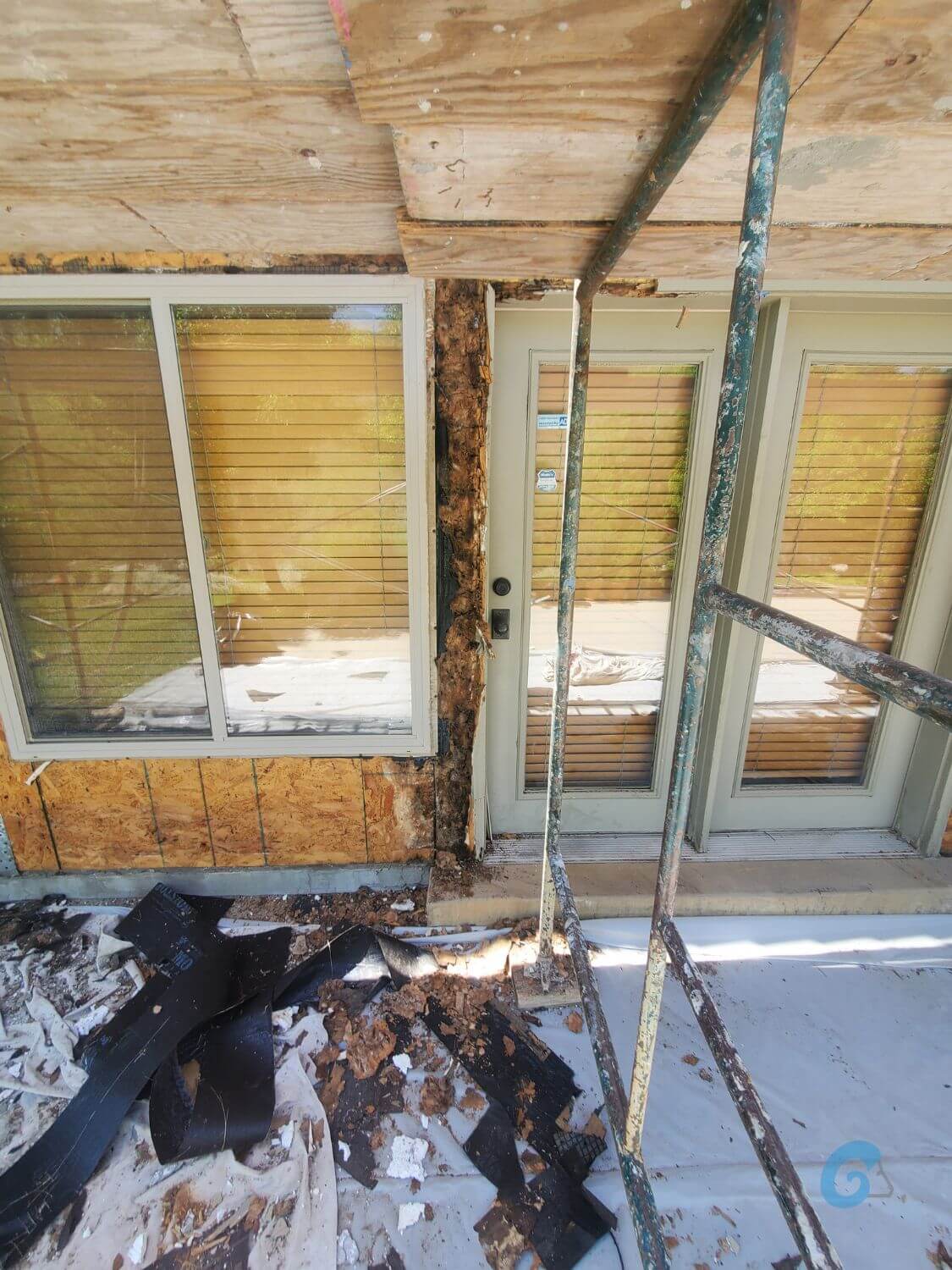
The bottom of an exterior door is one of the most vulnerable parts of the opening because it sits directly above a slab, deck, landing, or framed floor. Water can collect against the threshold during storms or snowmelt. If the sill pan is missing, too short, poorly sealed, or not tied into the surrounding WRB, moisture can move into the subfloor, wall framing, slab edge, or interior finish.
Threshold movement can also create hidden openings. Every step across a residential patio door or high-traffic commercial entry places force on the threshold. Over time, that movement can break sealant bonds under the sill and at the stucco-to-jamb connection. The exterior may still appear sealed while water is entering through a concealed gap.
Common door moisture barrier failures include:
Roof and deck conditions should also be considered during door leak diagnosis. A missing kick-out flashing can direct concentrated roof runoff down a stucco wall and behind the door header. At balconies and elevated doors, a poorly waterproofed ledger or deck-to-wall transition can send water into the threshold area and damage rim joists, floor framing, sheathing, or interior finishes. The wet area near the door may therefore be the endpoint of a leak that begins several feet away.
Accurate door leak repair begins by isolating the entry point instead of assuming the threshold is the only problem. Water testing can start at the lowest portion of the opening and progress upward through the threshold, jambs, head, and nearby wall transitions. This helps determine the elevation where water is entering and reduces the chance of repairing the wrong component. Moisture readings and selective invasive testing may also be used to define the extent of concealed damage.
Once the failure area is identified, stucco may need to be removed approximately 12 to 18 inches around the door frame and along the threshold. Additional removal may be required when moisture has traveled farther into the assembly or when adjacent deck, roof, or wall flashing is involved. Opening the exterior gives direct access to the WRB, flashing, sheathing, framing, lath, and sealant interfaces that cannot be evaluated from the finished surface.
Damaged OSB, plywood, subflooring, rim joists, insulation, wood framing, gypsum sheathing, or corroded metal components are repaired or replaced as required by the project conditions. A continuous sill pan is then installed or reconstructed with the appropriate back dam and end dams, and the pan is integrated with the wall drainage plane. Self-adhered membrane can be used at the jambs and sill to create properly overlapped transitions that direct water outward.
The door frame can then be reset using compatible sealant and flashing details. For applicable assemblies, the threshold may be set in a heavy butyl sealant bed to reduce water entry below the sill. New lath and stucco are installed to restore the wall system, followed by a compatible finish and high-performance perimeter sealant.
The objective is not to make the exterior surface hold all water out. The objective is to create layered protection that manages any water that reaches the concealed drainage plane and directs it safely back to the exterior.
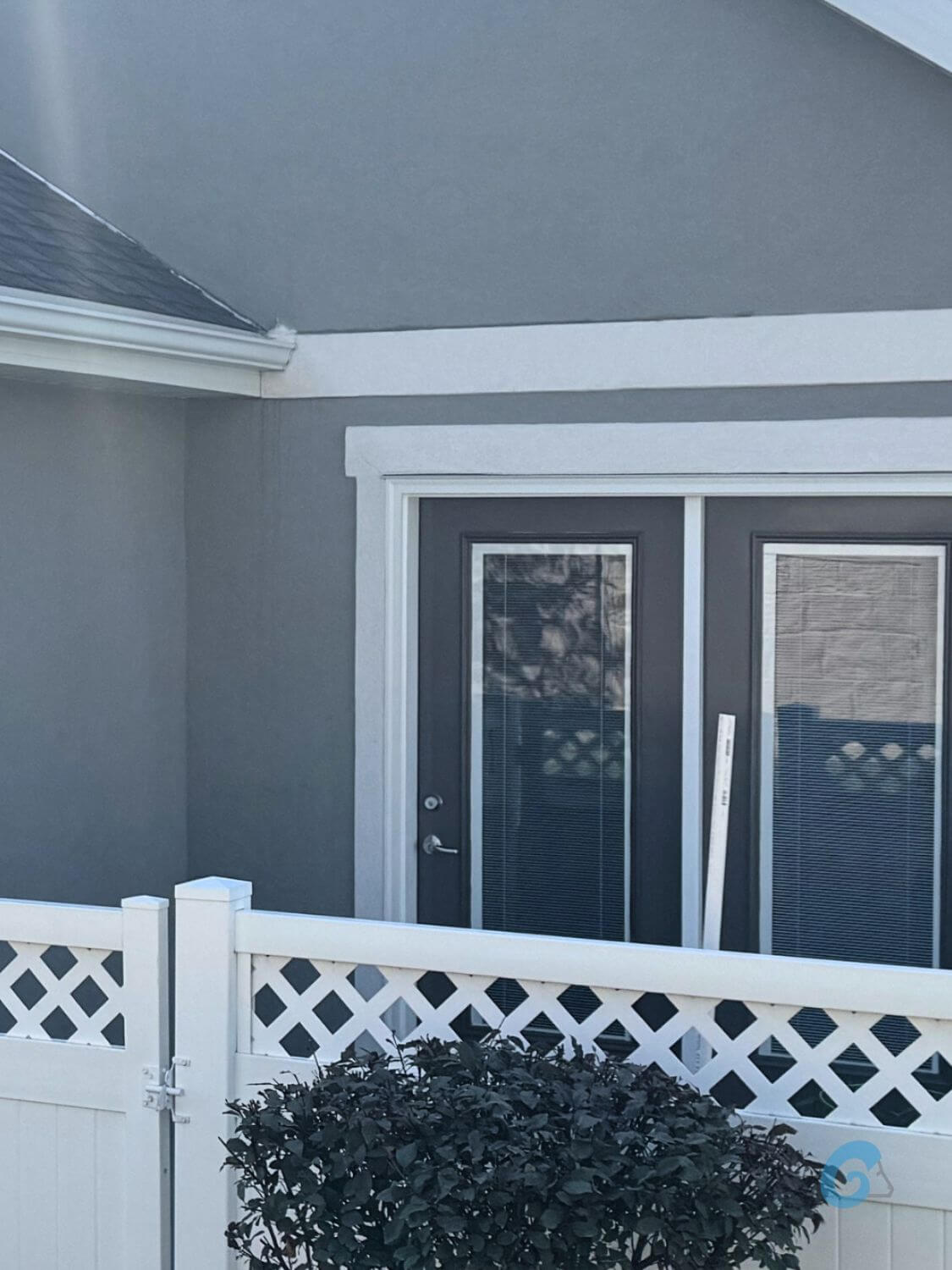
The repair strategy depends on the type of door, wall system, substrate, and level of traffic at your property. Residential openings commonly include hinged wood or fiberglass doors and sliding glass patio doors installed over wood-framed floors or concrete slabs. Frequent failure points include the corners of sliding-door frames, unflashed rough openings, deteriorated threshold seals, and missing sill pans. If water remains active, OSB subfloors, hardwood, carpet, floor joists, wall framing, and insulation can deteriorate.
Commercial door leak repairs may involve aluminum storefront doors, hollow metal utility doors, automatic sliders, curtain-wall transitions, concrete slabs, metal framing, or glass-mat gypsum sheathing. High traffic, vibration, carts, equipment movement, pressure washing, and repeated thermal movement can place greater stress on threshold anchors and perimeter expansion joints. Water intrusion can lead to damaged interior drywall or tile, corroded fasteners, rusting steel components, and deterioration along concrete slab edges.
Municipal buildings, schools, public facilities, office properties, retail locations, HOAs, multi-family communities, and other managed properties can present additional repair considerations. You may need to maintain safe pedestrian access, preserve ADA-compliant transitions, coordinate work around occupants, and limit disruption to business operations.
Flush or low-profile accessible doorways require especially careful drainage planning because there is less vertical separation between exterior runoff and the finished interior floor. Exterior slope, trench drainage, threshold design, sill pan configuration, sealant joints, and surrounding waterproofing must work together to reduce the potential for water to move across the opening.
Repeated leaks at multiple doors may indicate a larger construction or building-envelope issue rather than isolated sealant failure. Evaluating common details across similar openings can help identify whether the same sill pan, WRB, stucco, threshold, or drainage defect exists throughout the property.
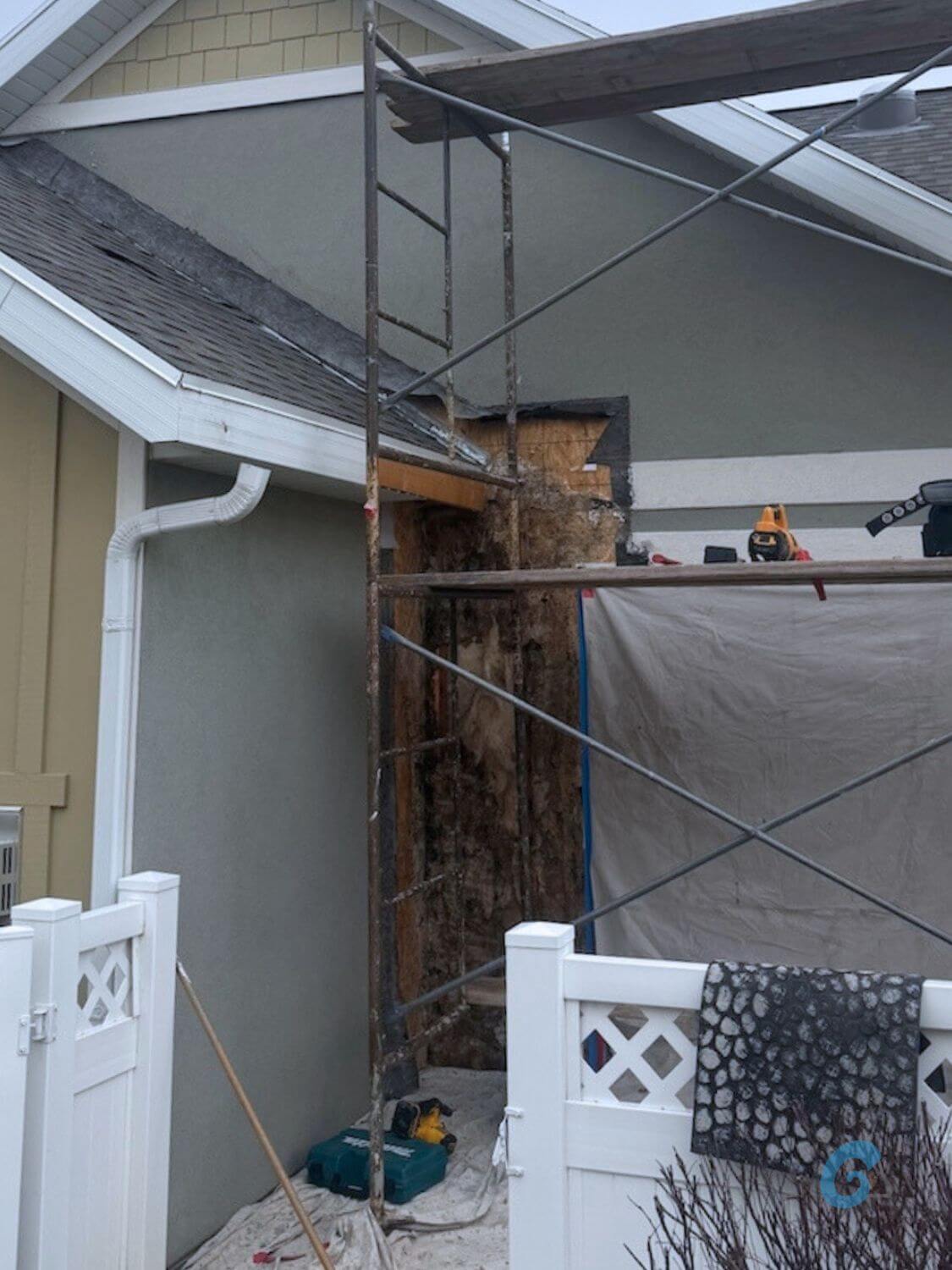
A leaking exterior door should be evaluated as part of the surrounding wall and floor system. Replacing weatherstripping or applying surface caulk can be appropriate when those components are the actual source, but recurring water at the threshold often requires deeper investigation. If the sill pan is missing, the WRB is incorrectly lapped, the stucco-to-frame joint has failed, or water is being directed toward the opening from a roof or deck, the repair must address those conditions.
RAM Builders Stucco & Exteriors provides door leak repairs and exterior water intrusion repairs for Utah properties where moisture is entering around thresholds, sliding doors, storefront openings, exterior utility doors, balcony doors, and other wall penetrations. Your project can include diagnostic water testing, stucco cutback, substrate repair, sill pan installation, flashing integration, WRB reconstruction, door reinstallation, stucco restoration, and perimeter sealing based on the conditions found.
Searching for door leak repair in Utah often begins after visible water has already reached the interior. Acting when you first notice staining, loose flooring, deteriorating trim, cracked stucco, failed sealant, or repeated moisture after storms can help reduce the extent of concealed damage.
For residential, commercial, business, multi-family, HOA, institutional, and municipal properties, the goal is to restore a continuous drainage path around the exterior door opening. When the threshold, sill pan, flashing, WRB, stucco, and adjacent transitions are repaired as one coordinated system, your building is better prepared to manage wind-driven rain, snowmelt, runoff, and seasonal Utah weather.
Contact RAM Builders Stucco & Exteriors to schedule an evaluation for door leak repair in Utah, door flashing repair, stucco water intrusion, sill pan installation, threshold leak repair, or exterior building-envelope damage. Addressing the source of the water intrusion can help protect your flooring, framing, wall systems, interior finishes, and long-term property performance.