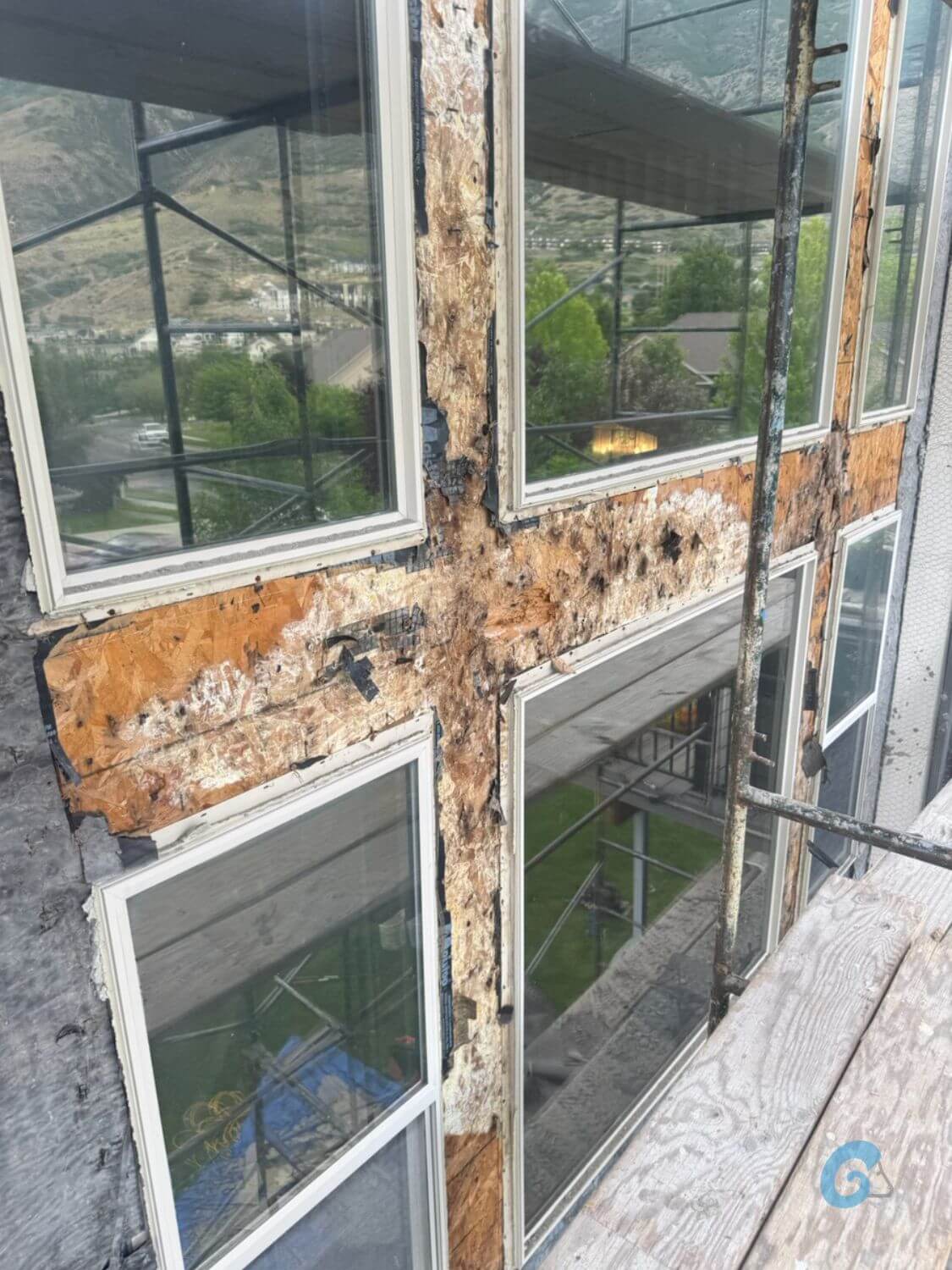
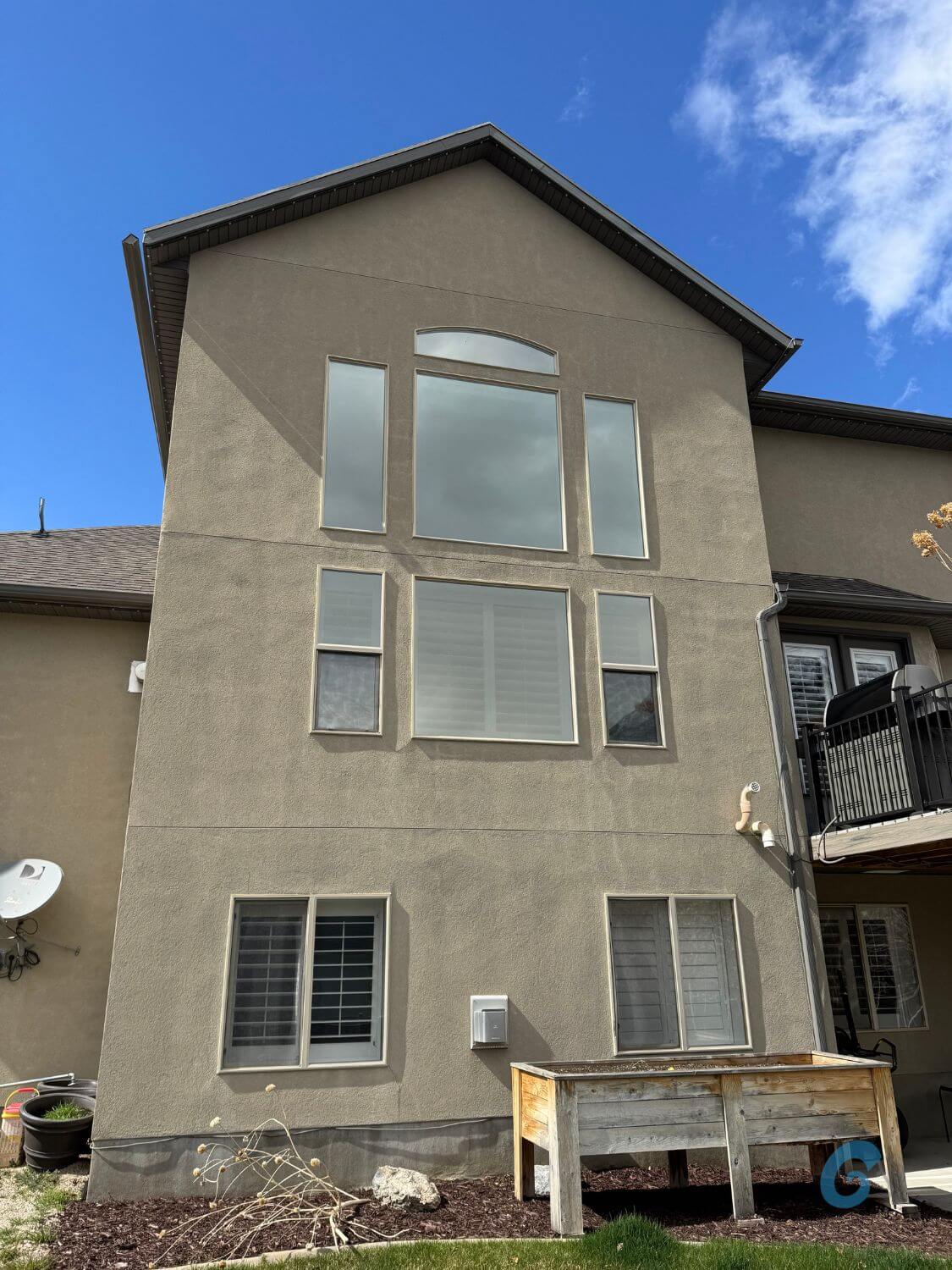
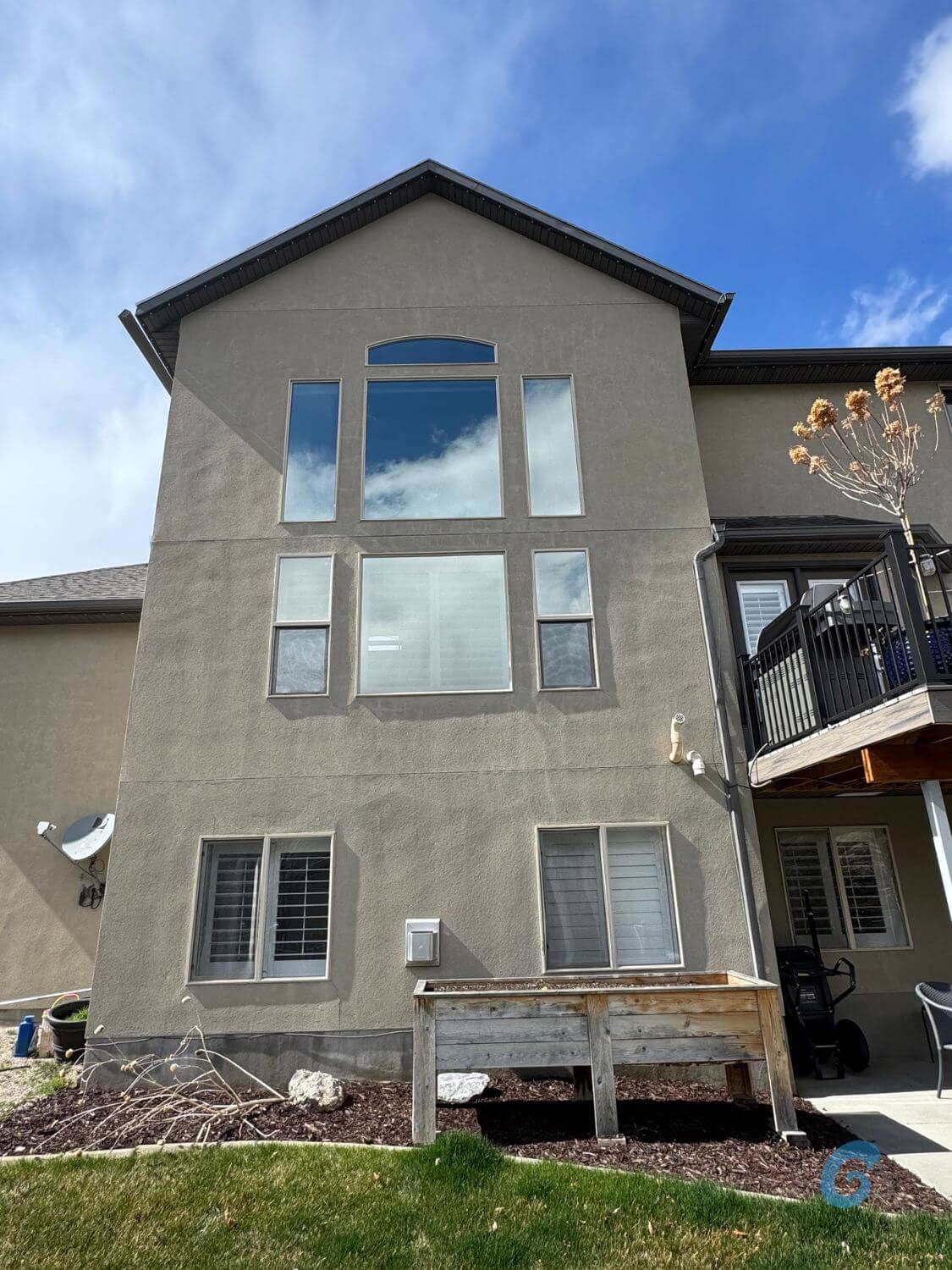
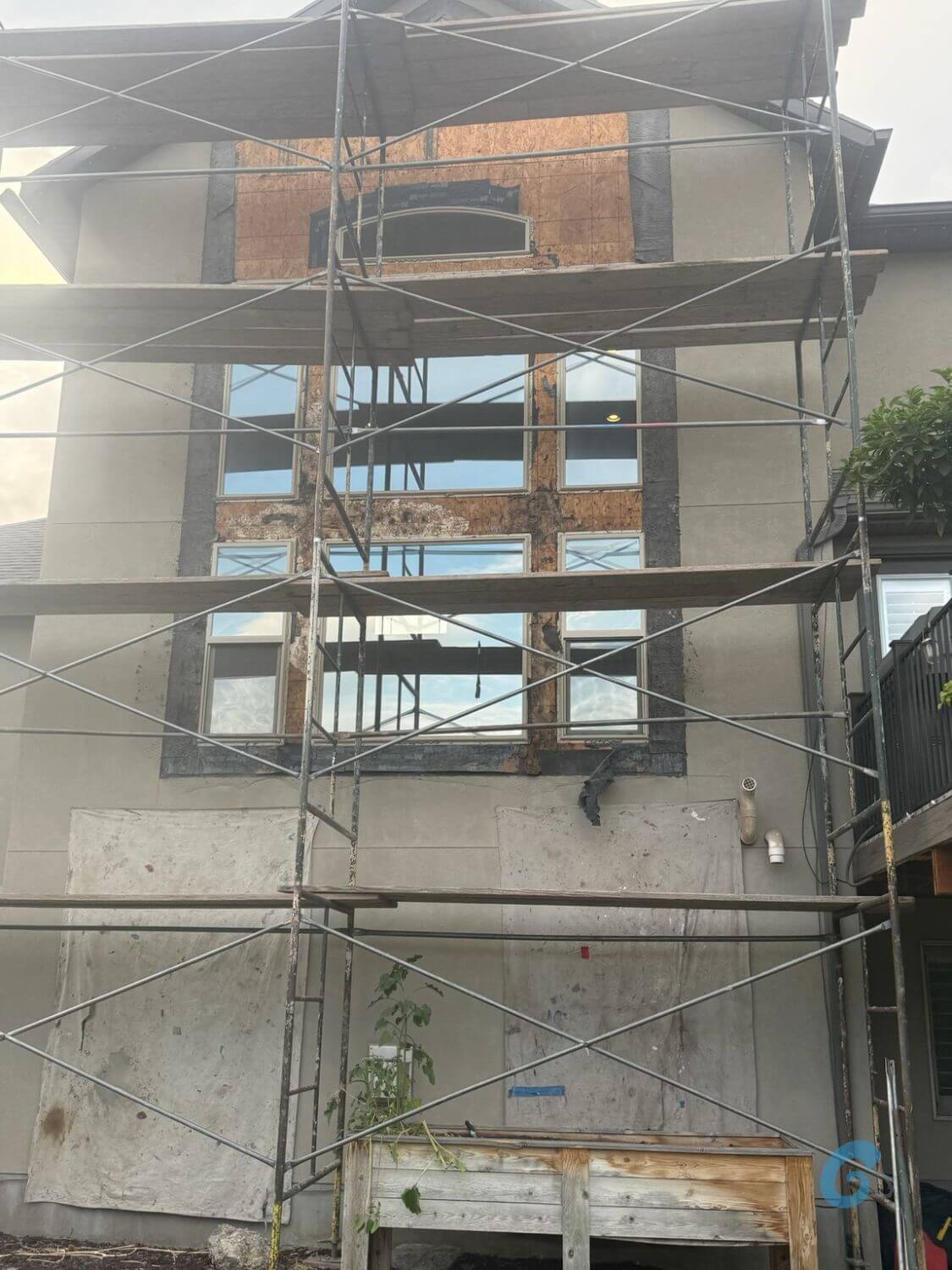
When water appears around a window, it is easy to assume the window glass, sash, or frame has failed. In many Utah properties, however, the visible window is only where the moisture becomes noticeable. The actual source is often a failure in the wall's drainage plane, weather-resistive barrier (WRB), flashing system, or exterior stucco assembly surrounding the opening.
RAM Builders Stucco & Exteriors provides window leak repair in Utah with a building-envelope approach. Instead of relying on surface caulk as the primary repair, your property is evaluated to determine how water is entering, where it is traveling, and which concealed materials may have been affected. This is especially important with stucco and EIFS exteriors because water can move behind the finish before staining drywall, damaging trim, wetting insulation, or deteriorating structural materials.
Utah properties are exposed to strong UV radiation, wind-driven rain, snow, freeze-thaw cycles, and large temperature changes. These conditions place repeated stress on exterior sealants, stucco joints, flashing connections, and moisture-control materials. Whether you own a residence, manage an apartment or HOA property, operate a commercial building, or oversee a municipal facility, repairing the drainage system around the opening helps address the source of the leak instead of only covering the visible symptom.
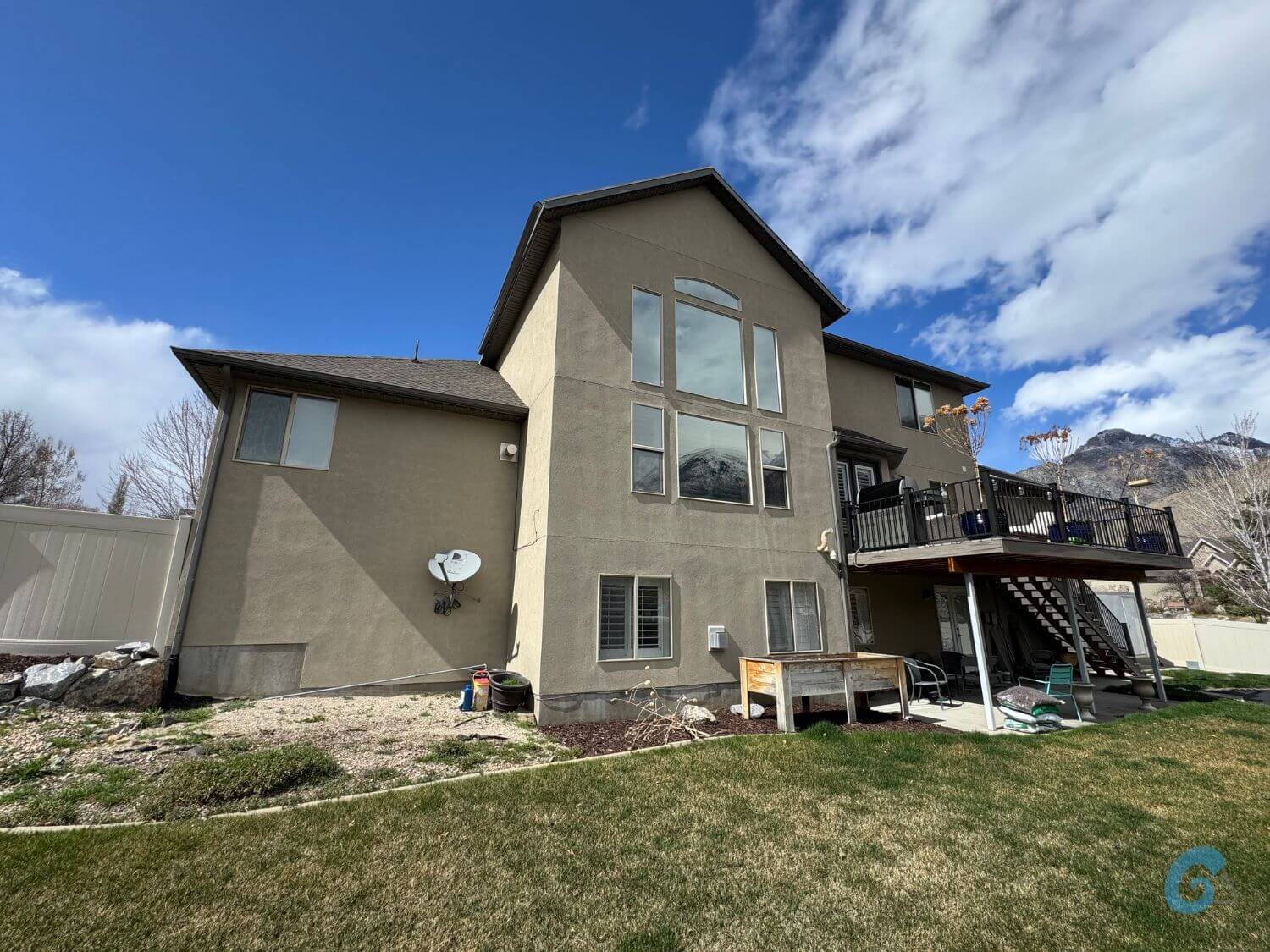
A properly constructed exterior wall is designed to manage water in layers. Stucco and other exterior finishes provide the first level of protection, while the WRB and flashing behind the finish direct incidental moisture down and away from the structure. When those layers are installed incorrectly, damaged, reverse-lapped, punctured, or blocked, water can enter the wall cavity.
Improper window flashing integration is one of the most common causes of water intrusion around an opening. Flashing components should work with the WRB in a weatherboard or upper-over-lower sequence so water continues moving outward and downward. Reverse laps can direct water behind the barrier. Missing sill pans, incomplete flashing tape, improperly detailed head flashing, and construction punctures can create additional pathways.
Common conditions associated with stucco window leaks include:
Sealant is an important part of many window perimeter joints, but it should not be used to trap water that needs a designed drainage path. Applying new caulk over an underlying flashing or WRB defect may temporarily change where water appears without restoring proper drainage. A successful repair requires the drainage plane, flashing, sealants, and exterior finish to function together as a complete water-management system.
Effective window water intrusion repair begins with identifying the actual path of moisture. Water can enter above or beside a window and travel along sheathing, framing, fasteners, or the WRB before it becomes visible indoors. For that reason, the wet area inside your property does not always identify the exterior entry point.
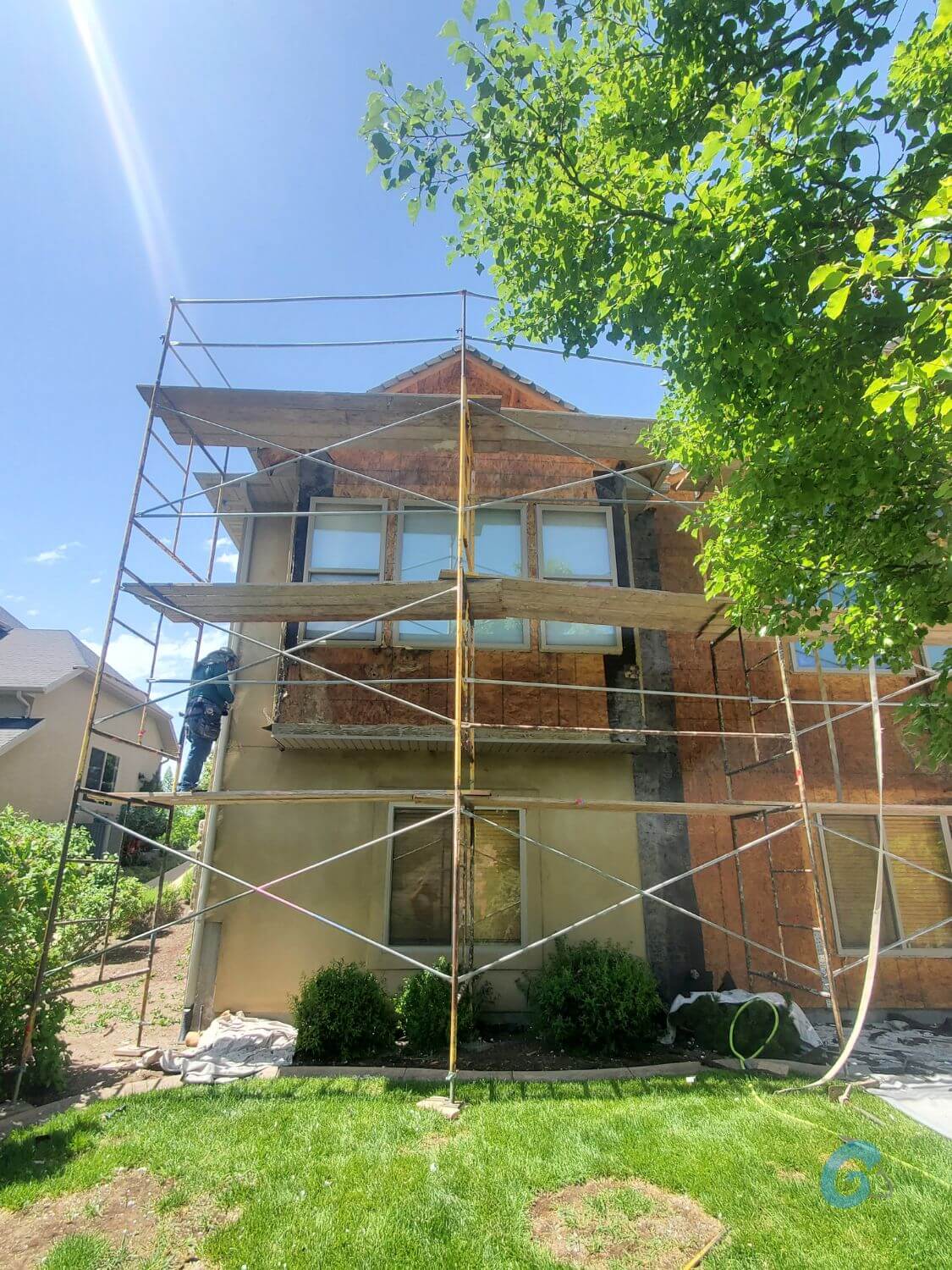
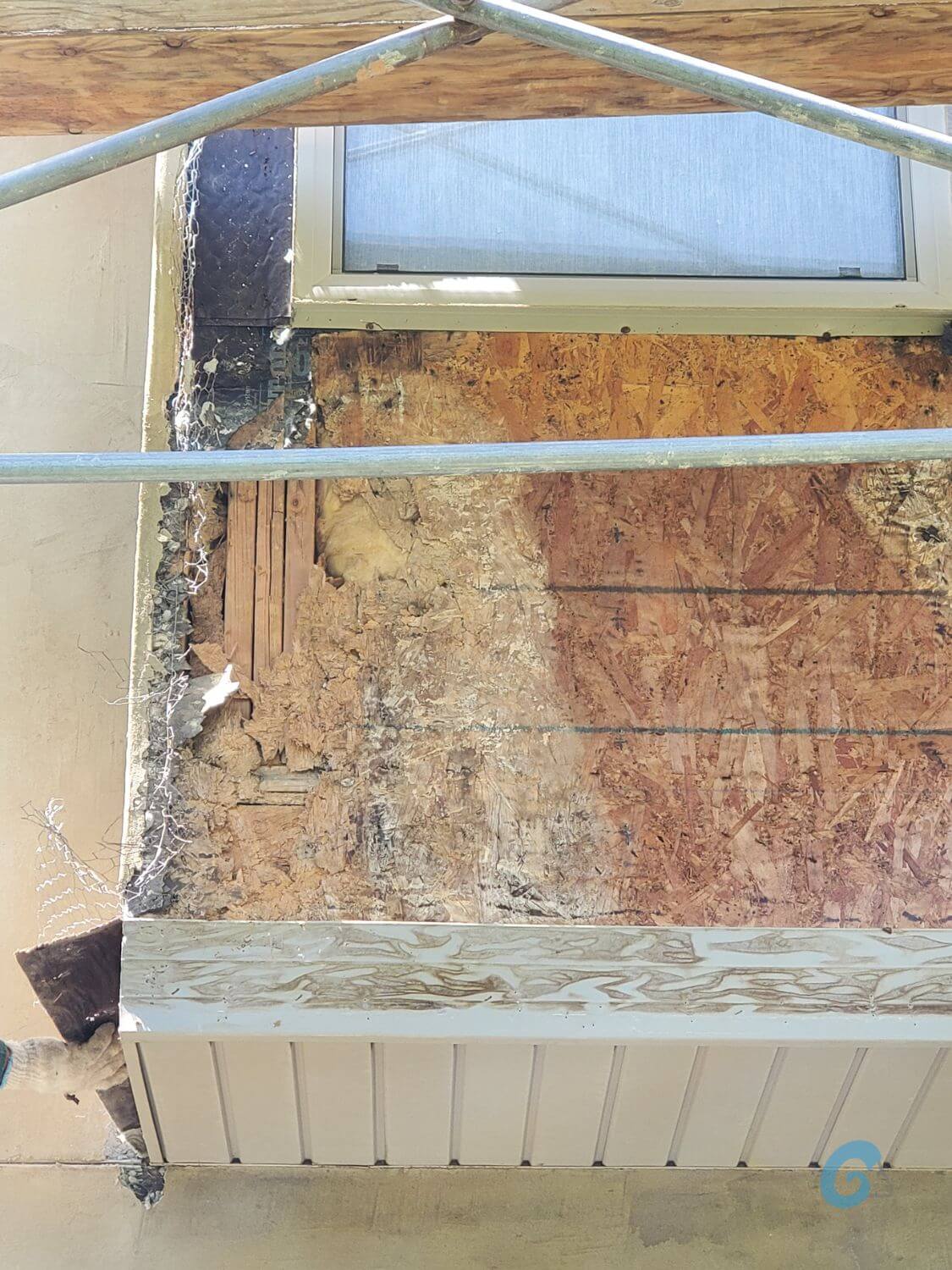
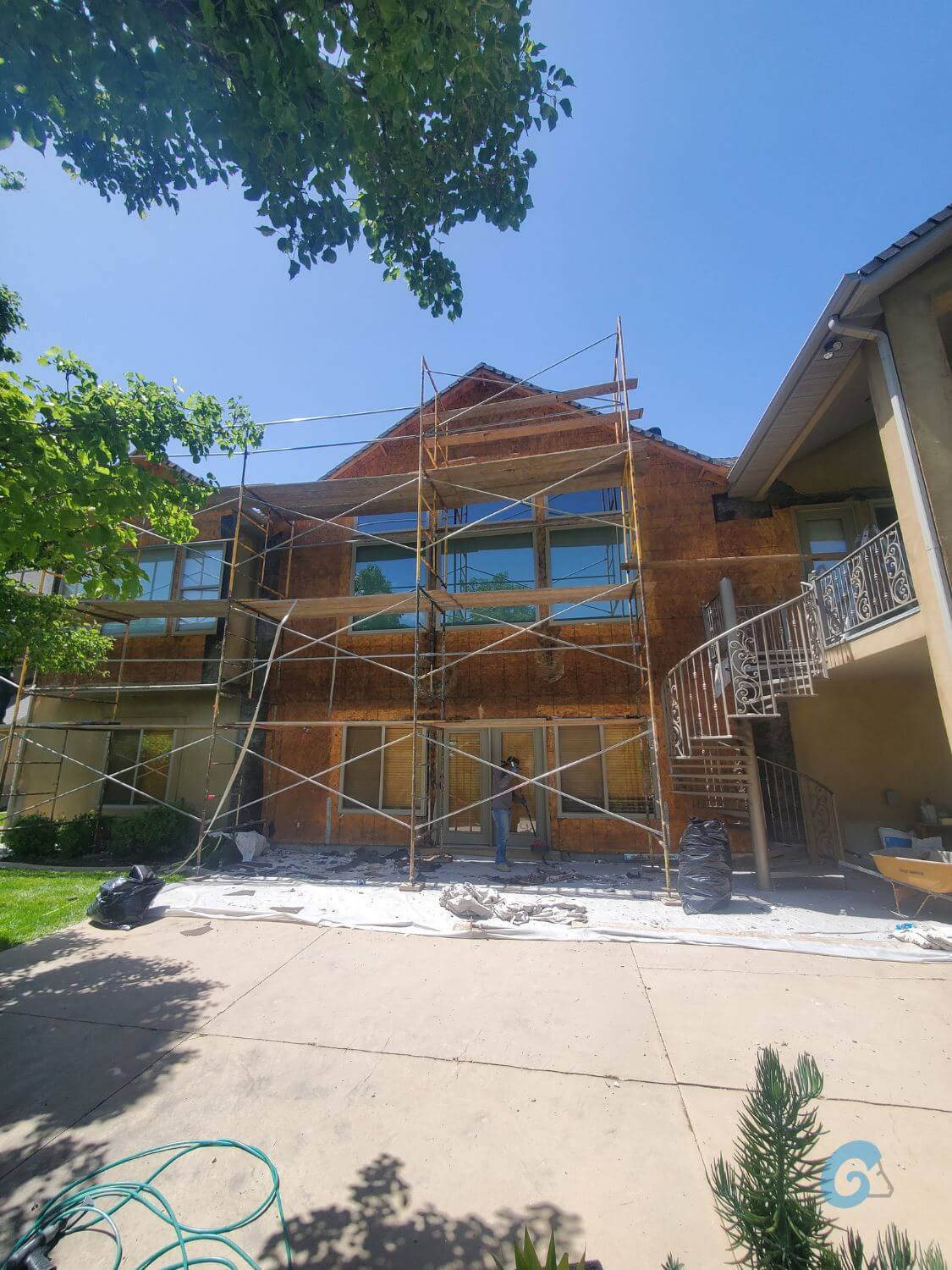
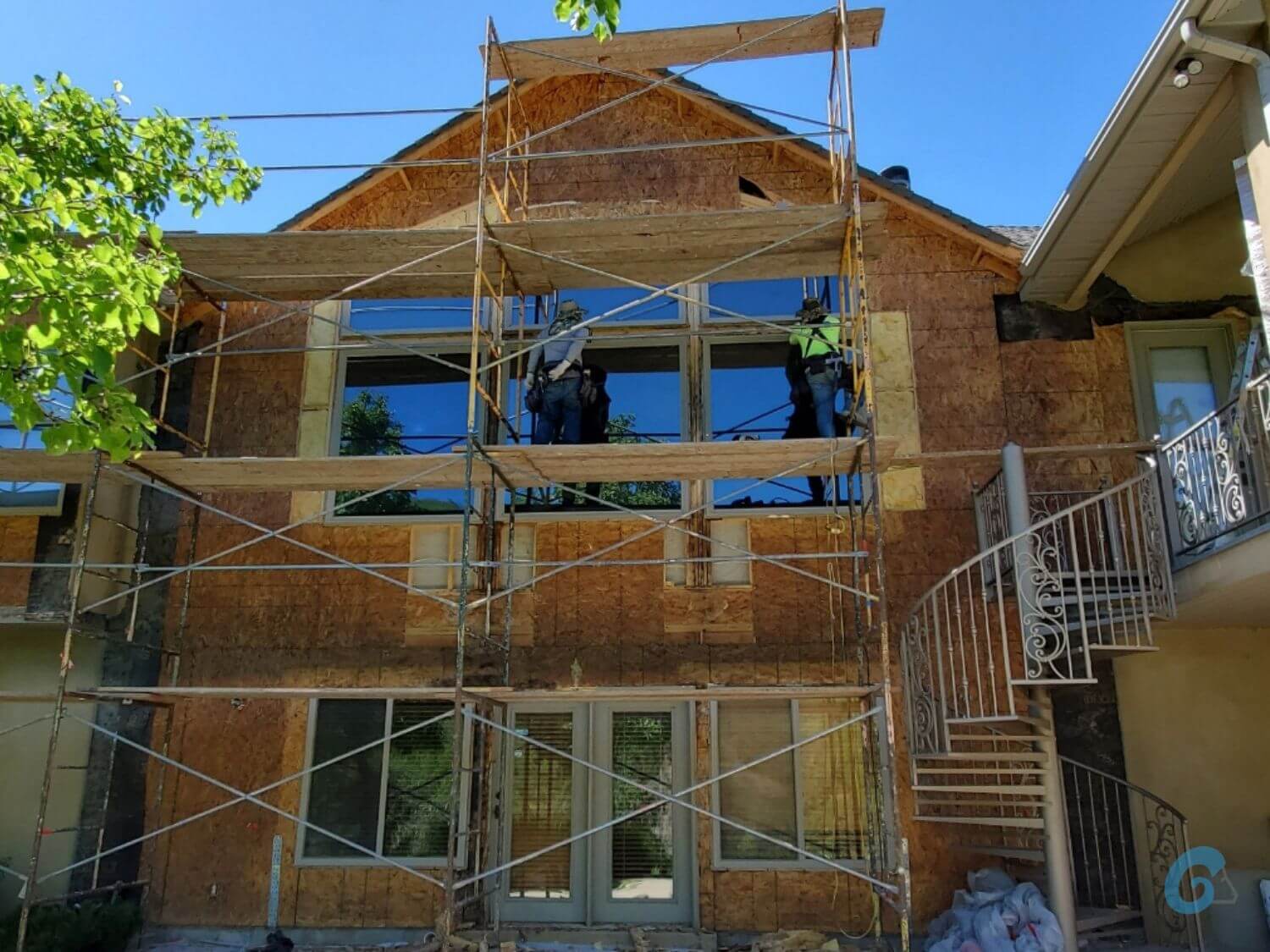
Your repair may begin with a visual building-envelope inspection, targeted water testing, moisture readings, and, when appropriate, invasive moisture probing. The goal is to define the affected area before exterior materials are removed. Once the suspected leak boundary is established, stucco may be cut back approximately 12 to 24 inches around the opening, or farther when site conditions show that additional access is necessary.
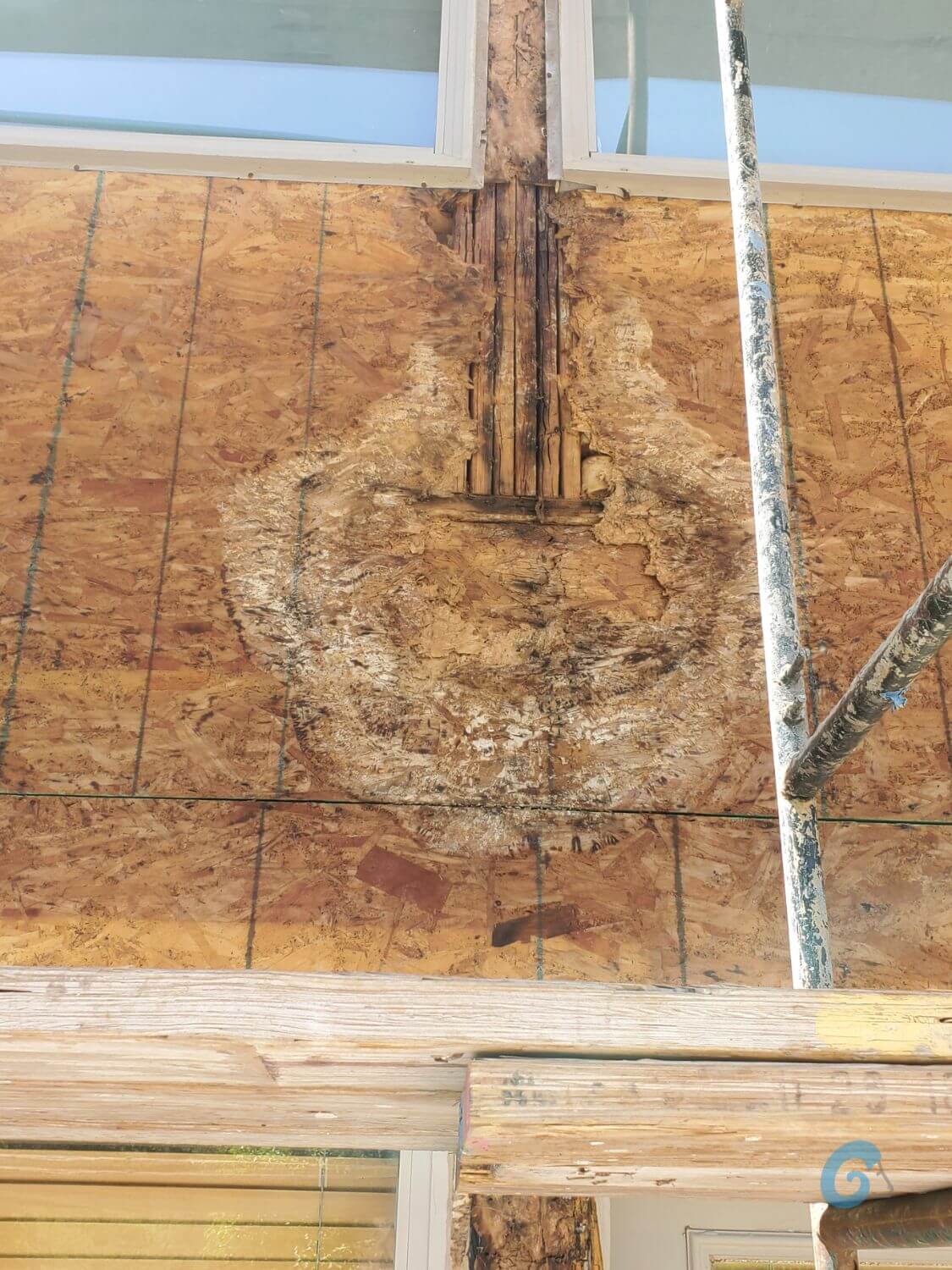
After the wall assembly is opened, the sheathing, framing, insulation, lath, WRB, and flashing can be evaluated directly. Damaged or deteriorated materials are removed and replaced as required by the project scope. If moisture has contributed to mold or other microbial growth, the affected area should be evaluated and handled using appropriate remediation practices before the wall is closed.
New self-adhered flashing, sill-pan details, head flashing, and WRB transitions are then integrated so the layers shed water toward the exterior. Proper lapping is essential. The repair is not simply about adding more waterproof material. Each component must connect to the surrounding drainage plane in the correct sequence so water can move down and out instead of becoming trapped inside the wall.
For traditional three-coat stucco, the repaired area can then receive new lath, scratch coat, brown coat, and finish coat. EIFS and thin-coat systems require repair methods compatible with their original drainage, reinforcing mesh, insulation, base coat, and finish components. Perimeter joints are completed with compatible commercial-grade polyurethane, silicone, or other specified sealants where appropriate. Texture and finish matching are addressed as part of restoring the appearance and performance of the exterior wall.
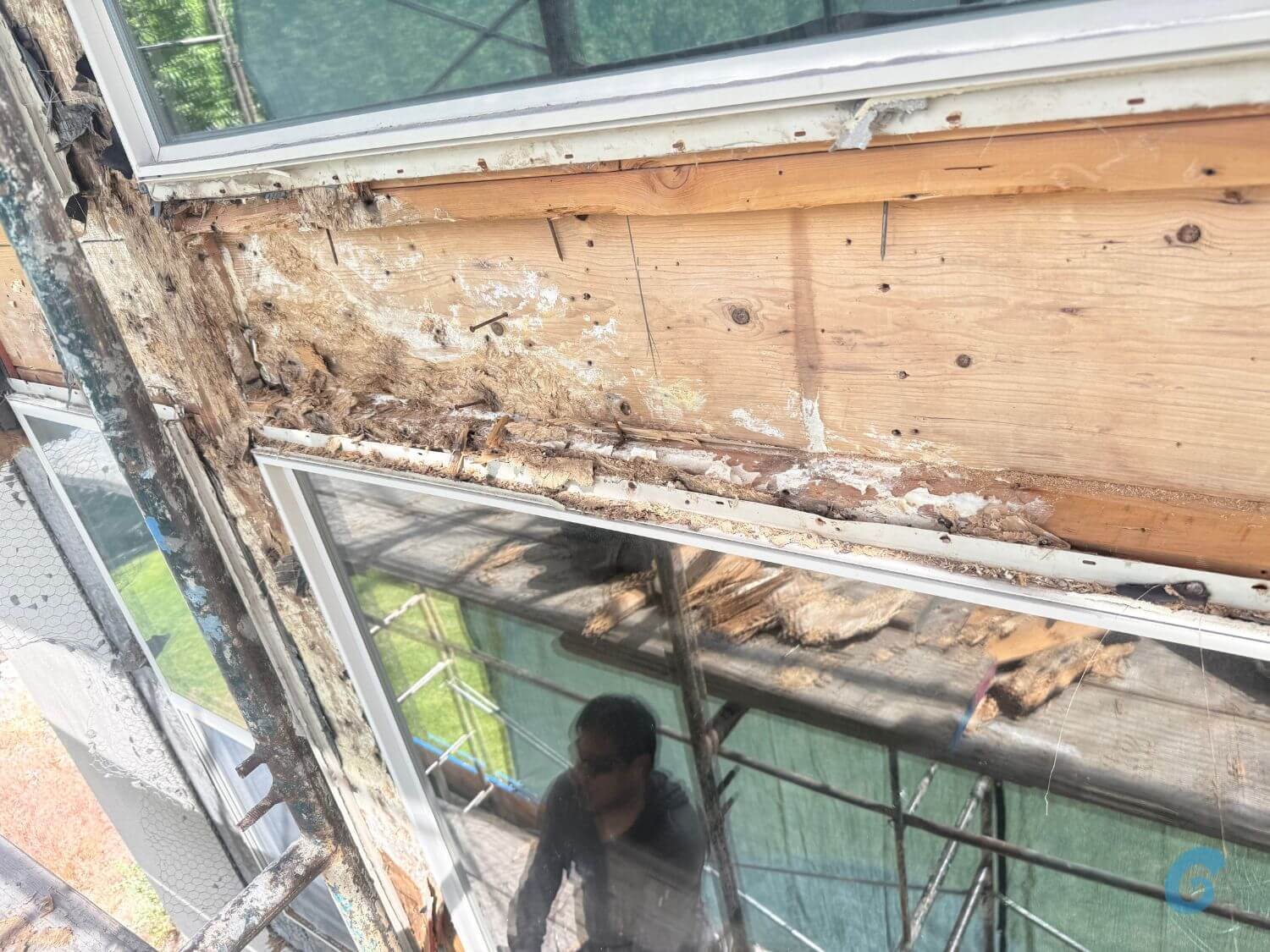
Window leak repairs vary substantially by building type. In a residential stucco wall, you may be dealing with wood studs, OSB or plywood sheathing, building paper, house wrap, and three-coat stucco or EIFS. Hidden water can deteriorate wood sheathing and framing while also wetting insulation and interior finishes. A localized residential repair may involve removing stucco around the window, replacing damaged wood, reconstructing the WRB and flashing, and restoring the exterior finish.
Commercial and multi-family properties can involve metal studs, glass-mat gypsum sheathing, concrete masonry backup walls, EIFS, thin-coat stucco, curtain-wall transitions, expansion joints, and more complex drainage details. The repair scope may require a full-bay cutback, replacement of deteriorated joint sealants, new transition membranes, corrosion evaluation at fasteners, or integration with adjacent facade systems.
Municipal buildings, schools, offices, retail properties, community facilities, and other public or business properties also require attention to access, occupant safety, scheduling, and protection of interior operations. When a leak affects tenant space, offices, public areas, inventory, equipment, or interior finishes, identifying the source early can help reduce the amount of secondary repair work.
For larger buildings, repeated leaks at multiple windows can also indicate a system-wide installation defect rather than isolated sealant failure. Evaluating representative openings and common construction details can help determine whether you are facing one localized problem or a recurring building-envelope condition. This type of assessment is especially valuable for HOAs, apartment communities, office buildings, retail facilities, and municipal properties where the same exterior wall system may be repeated across dozens or hundreds of window openings.
A water stain below a window, peeling paint, soft drywall, swollen trim, persistent musty odors, cracked stucco, failed perimeter caulk, or visible moisture after storms should be treated as a reason to investigate the surrounding wall system. The longer water remains active behind stucco or another exterior finish, the greater the possibility of concealed damage.
RAM Builders Stucco & Exteriors can help you evaluate window leaks, stucco water intrusion, flashing failures, moisture-barrier problems, and related exterior construction damage throughout Utah. Your repair can be scoped around the actual failure, from a localized window opening to a larger section of exterior wall where drainage-plane defects are repeated.
For residential, commercial, multi-family, business, HOA, and municipal properties, the objective is the same: restore a continuous path that directs water away from the opening and safely to the exterior. That means combining accurate diagnostics, proper flashing integration, substrate repair, WRB reconstruction, compatible stucco restoration, and correctly placed sealants.
A complete window leak repair can also help prevent repeated interior repairs. Replacing stained drywall or repainting around a leaking window does not stop moisture from entering the wall. Likewise, continuously adding exterior caulk may conceal symptoms while leaving damaged flashing or moisture barriers untouched. Addressing the exterior wall assembly gives you a repair designed around how water actually moves through the building envelope.
If you are searching for window leak repair in Utah, stucco window leak repair, window flashing repair, exterior water intrusion repair, moisture barrier repair, or building-envelope repair, contact RAM Builders Stucco & Exteriors to schedule an evaluation. By addressing the wall assembly behind and around the window, you can stop recurring water intrusion, protect interior finishes, reduce the risk of concealed structural damage, and restore the long-term performance of your property exterior.